It was close to midnight when my assistant and her husband rushed through my front door and found me collapsed on the floor.
I was in cold sweats, shaking, covered in hives. I could barely speak. I kept whispering the same two words into the phone in my hand. It’s over. It’s over. It’s over.
On the other end of the line, our Head of Infrastructure was on a three-way call with top-tier support at Dell and Citrix. Our cloud servers had crashed. We had lost mail and file data for clients. And then I learned the thing I was not prepared to hear. We didn’t have a backup. The people in charge of running them had not run them. The reports that should have surfaced this had not surfaced it. The odds of catastrophic failure were low, so the work of verifying had gotten passive across an entire chain of roles.
In that moment on the floor, I thought I knew what was falling apart. Fifteen years of my life’s work. The exit strategy I had been quietly building toward. The reputation I had built with every client. A future I thought I had earned.
I was wrong about what was falling apart. All those things survived the calamity. It took me years to understand why I had fallen apart as if the ground had opened up beneath me.
What I Told Myself
I told myself the story most CEOs would tell. The infrastructure team failed. The process failed. We will rebuild, we will install controls, we will never be here again.
That story was convenient. It located the problem outside of me. It also kept me from seeing what had actually happened.
The crash, however, was the result of the company culture I had built. I had bought the company. I had merged its people into mine. I had set the reporting lines, the responsibilities, the pace. I had hired the Head of Infrastructure. The people who reported up through that role, the ones who were supposed to run the backups and verify the reports. Everyone in the company had learned the same thing. The careful, detailed, unglamorous work was the kind of work nobody noticed when it got done and nobody enforced when it did not. I had assumed they would care about it the way I cared about it. They had not. They were not negligent in any outright way of their own reasoning. They simply did not bring to the work the level of attention that work required.
The crash was not a moment of negligence by one person. It was the natural result of a system of trust I had spent fifteen years building.
Why did I build it that way?
That is the question that took me years to ask.
The Belief
I named the company Alpha Actual. The name had two meanings.
In the military, when someone calls for help on the radio and the person who can actually make the decision and see the thing through answers, they say Houston Actual. The actual person. The one whose word can carry the action. Alpha is also a financial term for the active return an investment delivers, the performance above and beyond a benchmark. I used those words to convey that what you expected from us was what you got. The actual matched the alpha.
I did not consciously know I was naming the company after a belief. I do now.
I grew up in an environment I could not trust to keep me safe. What offered love also offered harm. Two truths sat in the same place, and I learned young that what people said had little to do with what they did.
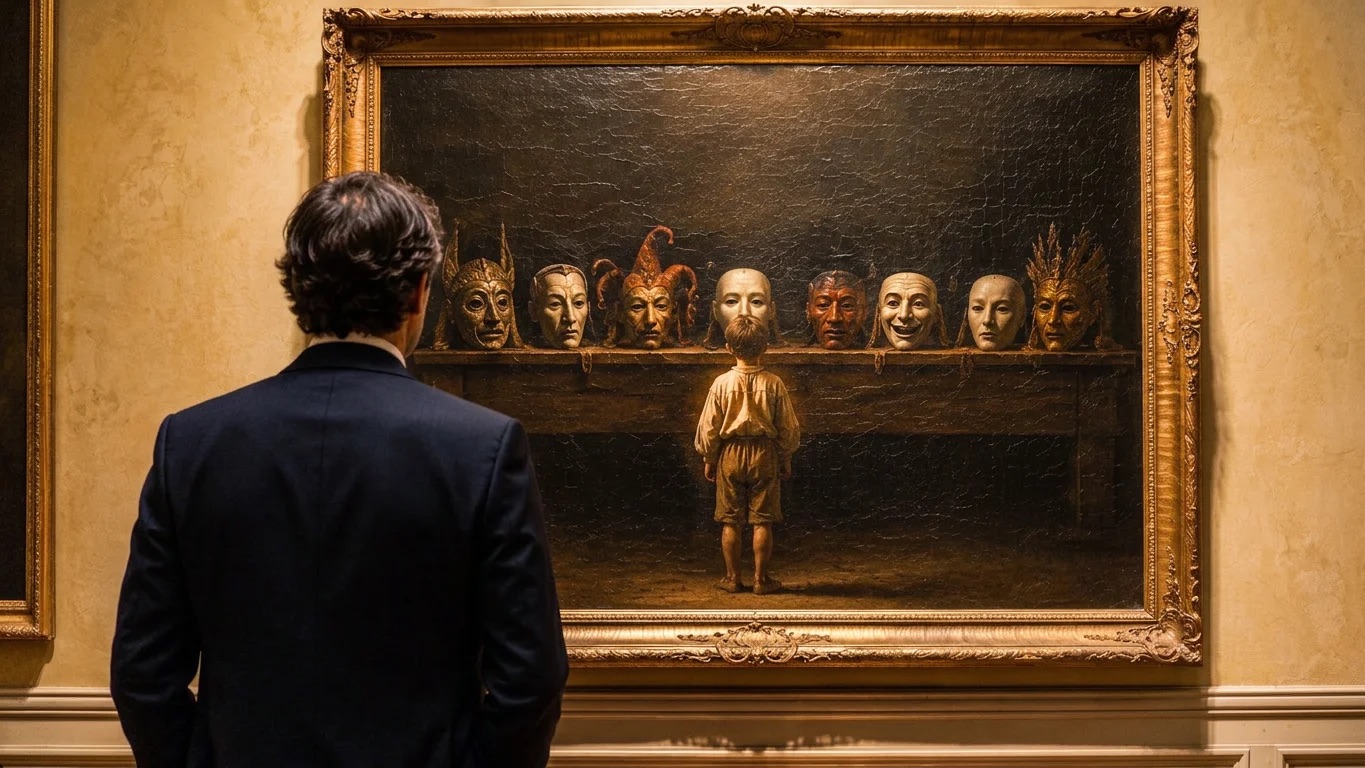
The belief that formed in me, slowly, over years, was this. When I am older, I will build a world made of responsible adults. The people around me will be reliable in a way the adults of my childhood were not. The promise and delivery will be the same thing.
I do not want to be cute about that. An eight-year-old who concludes that the adults around him cannot be trusted, and decides he will one day build his own world made of people who can be trusted, is doing survival work. The belief that took root was not a character flaw. It was my lifeline.
The company name was that belief stated to the world. I hired with the belief. I trained the company on it. I rewarded people who held it. And when people fell short of it, I took it personally, because the belief was personal. Much of my life played out the way it did because of my childhood experiences that had remained blind to me and unprocessed.
Therapists call it repetition compulsion.
If the people you hire are responsible adults, you should not need to check on every little thing. You should not have to doubt their word or reports. You should not need to verify the verifiers. The whole point of the belief is that you should not have to live the way you lived as a child, watching every little thing because you could not trust anyone.
So I trusted. And the company succeeded and fell apart by way of it. There were not enough checks on the people verifying backups because the belief did not let me see the need for them. Building them would have meant admitting the adults I had hired could not be trusted to be responsible and accountable, which would have meant admitting the belief itself could not hold. I could not admit that consciously then. I had organized my life around it.
The crash was my belief clashing against reality. A negative alpha of catastrophic proportions, actualized. As everyone knows, reality always wins.
How Beliefs Work
A belief taking hold in childhood does not just announce itself. It does not speak in the language of belief. It speaks in the language of what is obvious, what is logical, what any reasonable person would do. By the time you are an adult, the belief is not a belief to you. It is your reality, the way you see the world.
Depth psychology has a word for the part of the psyche that holds these unexamined operating principles. It calls them complexes. They are not pathologies. They are what we built to survive what we could not yet understand. And they keep running, long after the conditions that produced them have changed. The eight-year-old who concocted the belief does not get the news that you are thirty-five now and running a multi-million dollar company. He is still in the bedroom, curled up, trying to survive. That work of survival is just the wrong work for the life you are now living.
There is a line in the Tao Te Ching: To grasp is to lose. When I first read it, I understood it as a metaphor. I read it the way founders read wisdom literature, looking for a tactic. Be less attached to outcomes. Hold things lightly. Don’t micromanage.
That is not what it means.
What it means is that the hand trying to hold the world cannot do anything else with itself. It cannot receive. It cannot build. It can only grip. And the gripping produces the loss. Not because the universe punishes control.
Because a closed hand has stopped participating in what makes anything grow.
The grip of that belief was also the thing I was least able to see, because it felt like competence. It felt like leadership. It felt like the reason we were succeeding at all!
But the belief that keeps you safe is almost always the belief that keeps you small.
What I See Now
I have done decades of inner work through a Jungian lens. I now spend my time in coaching conversations with founders and executives. I see their beliefs now.
They built companies on beliefs they cannot see. The beliefs show up in everything: the hiring, the org chart, the culture, the products, the strategy. The companies are now showing many of them the limits of their beliefs, and they are confused about what is happening. The way I was confused for a long time.
I sit with founders who are running on hidden childhood beliefs, and I witness them slowly take notice.
Noticing is the work.
Our beliefs don’t fall away just because we notice them. But they do stop running us in the dark.
More Than A Decade Later
It has been more than a decade since I sold the company, which is its own story. The belief is still in me. It will be there until I die. That is not pessimism. That is honesty about a belief installed at eight and reinforced for forty years.
What has changed, however, is my relationship to it.
I can feel it now, when it is active. I can feel the pull to expect more responsibility from someone than they can give, and to register the gap as their character flaw rather than human nature. I can feel the impulse to lash out when an adult around me is not what the belief says they should be. I can hold the impulse now, instead of being run by it. I can sit in the tension between that belief and the nature of reality. I can ask whether the situation in front of me is reality, or whether the eight-year-old is looking at it.
Most of the time I can tell the difference. Sometimes I still cannot. My work is not to eliminate the belief. The work is to meet the child who built it, to thank him for helping me survive, and to let him know that the world he has prepared me for is not the world I am actually living in. The adults around me now are not the adults of his childhood. Or they are. It no longer matters. He does not have to keep watching for them as I now know how to watch over and take care of him.
He does not always believe me. I keep telling him and showing him anyway.
That is what I mean when I talk about transformation. A different relationship with the beliefs that took root before you had any say in the matter. The beliefs stay. Their grip on you loosens. The world becomes a place you are living in, instead of a place trying to match a child’s expectations from a long time ago.
Whatever is in front of you right now may also probably not be the thing. That thing may be older. And underneath. And the work, when you feel called to it, is not to fix what you see. It is to meet the part of you that needed the world to be different than it is, and to introduce that part to the life you have actually built, which is more than enough, and which has been waiting for you to arrive in it, for a long time.
The Thing Beneath the Thing: Questions Founders Ask Me
What does “the thing is never the thing” mean?
The crisis in front of you is rarely the real one. When my company’s servers crashed with no backups, I thought I was losing fifteen years of work. What had actually failed was a belief I had built the whole company on. The surface problem is usually the visible edge of something older and underneath.
Why do the same problems keep happening in my company?
Because a company quietly takes the shape of its founder’s beliefs, including the ones you cannot see. The hiring, the org chart, the culture, all of it carries them. When the same pattern keeps returning across teams and years, it is usually pointing at something in you, not bad luck.
How do childhood beliefs shape how someone leads?
More than we like to admit. I built a company around a belief formed at eight, that I would surround myself with people reliable in a way the adults of my childhood were not. It worked until it didn’t. These beliefs do not feel like beliefs. They feel like plain reality, which is exactly why they run us unseen.
Can you get rid of a limiting belief?
In my experience, no. The belief installed in childhood stays. What changes is your relationship to it. I can feel mine now when it is active, and hold it instead of being run by it. That shift, from being run by a belief to being able to see it, is the real work.
What does transformation actually mean in coaching?
Not fixing the problem in front of you. It is meeting the part of you that needed the world to be different than it is, and slowly loosening its grip. The belief may stay, but it stops running you in the dark, and your life becomes something you live in rather than something braced against an old fear.
On why the same problems keep returning until the deeper layer changes: Identity-Level Coaching for Founders.